野兽之道
Chinese scientists develop electrode coating to address signal loss and tissue adhesion problems in long-term brain-computer interface implantation_我的网站

一 | PRINCETON, Minn. -- Five law enforcement officers were shot and wounded Thursday in an incident near the east-central Minnesota city of Princeton, authorities said.The suspect was not in custody and the incident was ongoing late Thursday morning.Three of the officers were taken to North Memorial Hospital in the Minneapolis suburb of Robbinsdale while two were taken to a hospital in St. Cloud, said Robbinsdale Police Capt. John Elder, who was assisting the hospital, and added that none of the wounds appeared to be life-threatening.Elder said he did not immediately know which departments the wounded officers were from, but that they came from multiple agencies.The Benton County Sheriff’s Office provided few details in its initial statement. The department said it was being assisted by several other public safety agencies on a “critical incident” unfolding in Glendorado Township, which is a few miles west of Princeton. It said there was no danger to the general public, although the public was being asked to avoid the area.Video from KMSP-TV showed numerous law enforcement vehicles at the scene and officers in tactical gear.The area is about 50 miles (80 kilometers) northwest of Minneapolis.。

二 |
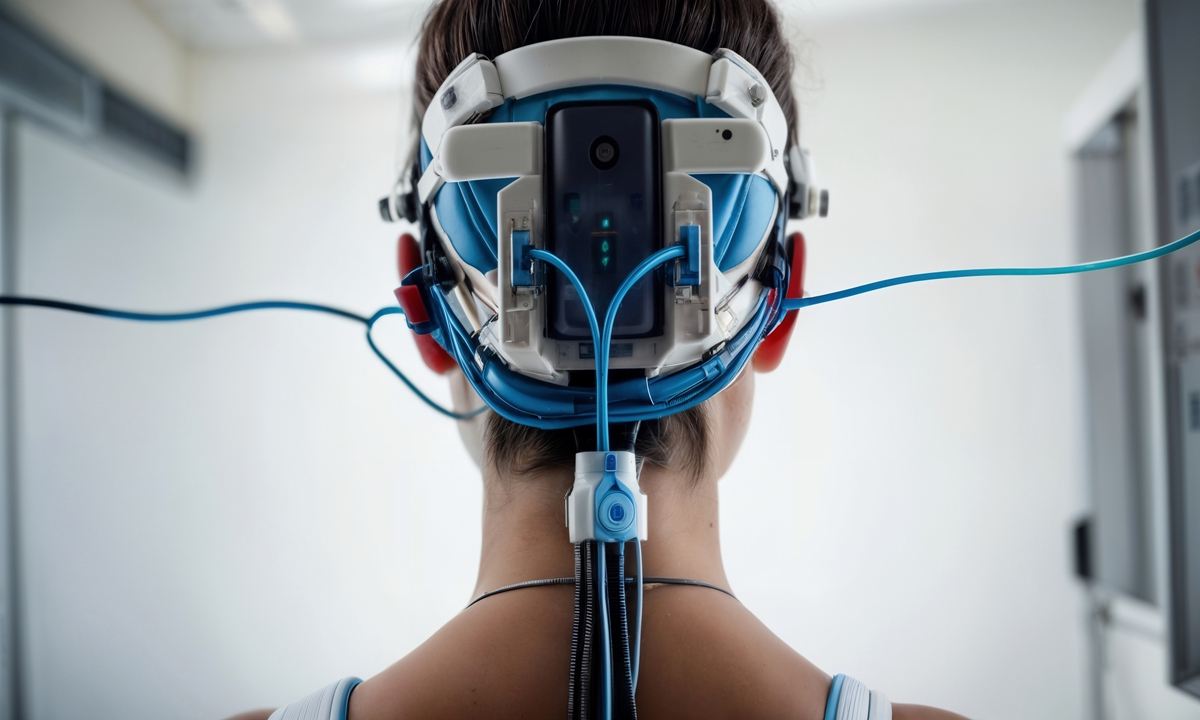
Chinese researchers have developed a multifunctional electrode coating that addresses key challenges in long-term brain-computer interface (BCI) implantation, including signal loss and tissue adhesion, bringing BCI one step closer to clinical application, the Global Times learned from the research team behind the findings on Sunday.
As an emerging field combining neuroscience and artificial intelligence (AI), BCI faces a major challenge of ensuring long-term compatibility between electrodes and brain tissue. Previous clinical trials showed that immune responses could cause implanted electrodes to retract after just three months, severely reducing signal quality and the number of available channels.
This problem stems from chronic inflammation triggered by implants, which creates insulating scar tissue around electrodes and separates them from neurons. Irreversible adhesion between electrodes and brain tissue after long-term implantation also makes device removal risky, potentially causing brain injury during follow-up surgeries.
Experiments showed that flexible neural electrodes coated with this material could operate stably in the brain for more than 300 days and could be safely removed without causing damage. This means the universal coating technology can make electrodes not only operate stably over the long term but can also be safely removed and replaced after aging, paving the way for long-term BCI applications.
Developed by the research team led by Zhang Wei at the Technical Institute of Physics and Chemistry, Chinese Academy of Sciences, associated with Beijing Tiantan Hospital, Shanghai Institute of Microsystem and Information Technology and NeuroXess, a high-tech life science company specializing in BCI technologies, the cationic alternating peptide electrode coating preserves electrode flexibility and conductivity, while offering antibacterial, anti-protein adsorption and immune-rejection-inhibiting functions.
A 300-day animal study showed the coating's effectiveness. Bare electrodes experienced a sharp loss of recording capability after 90 days of implantation and could barely detect neuronal signals after 300 days. In contrast, coated electrodes maintained stable recording channels and consistently captured neural signals above 155 microvolts.
In terms of neural modulation, after 300 days of implantation, conventional electrodes required a current of 100 microamps to induce weak limb responses, while coated electrodes triggered clear movements with only 2 microamps, improving modulation efficiency by 50 times.
Notably, the removal tests highlighted a key advantage of the coating that electrodes no longer form irreversible bonds with brain tissue. In the experiments, the coated electrodes were removed intact, with minimal damage to the surrounding brain tissue, Zhang told the Global Times on Sunday.
。
Current article:http://cq7.yukujuankewazuhangfei.sbs/2qc5qy8/3fudh.html
Published on:06:51:49
 守法公民
守法公民 公主小妹
公主小妹 豪杰春香
豪杰春香 虎牙直播
虎牙直播 大明王朝1566
 拥抱太阳的月亮
 4公司声讨战狼2
 诱惑我小妈
诱惑我小妈


